
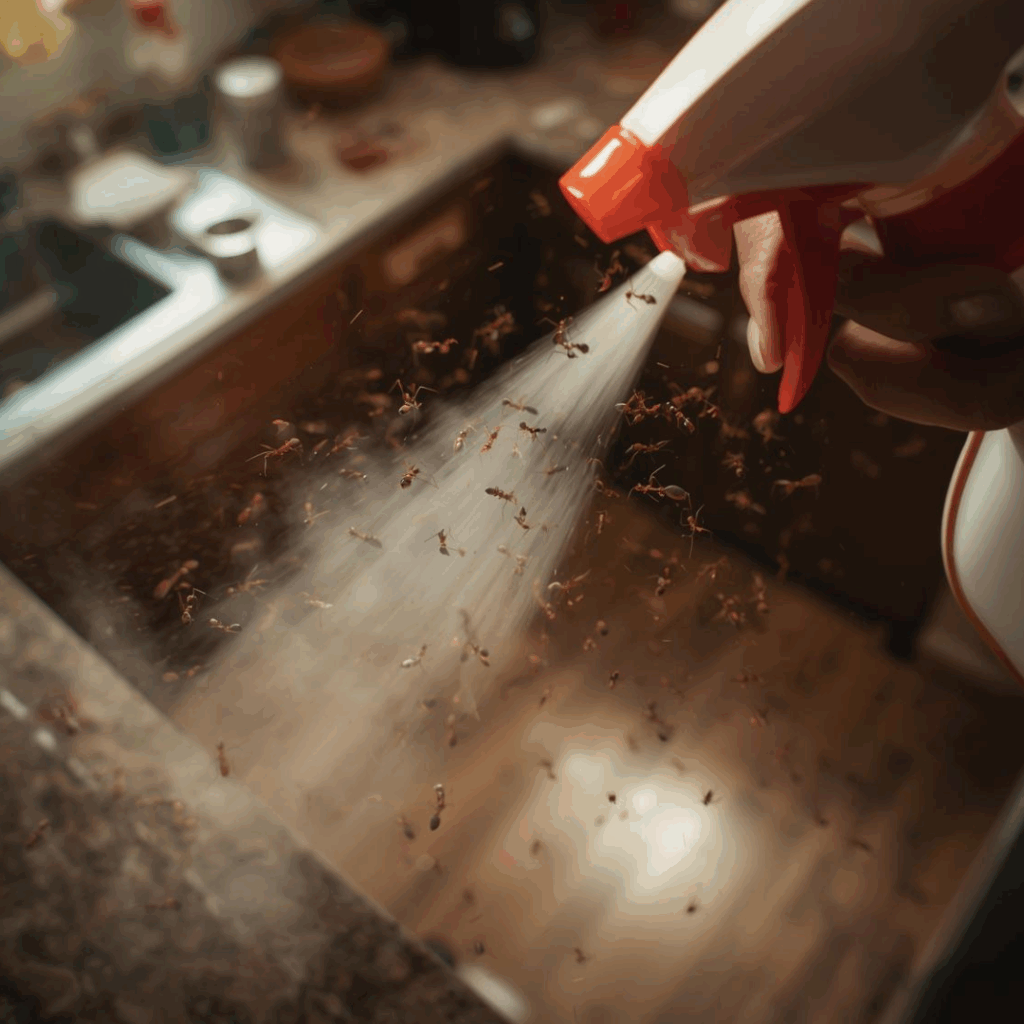
It is a familiar scene for many Melbourne homeowners: you walk into the kitchen to make a morning coffee, only to find a frantic line of ants trailing across your Caesarstone benchtop. The immediate, instinctive reaction is to reach into the cupboard for a canister of supermarket-brand ant spray. You douse the trail, watch the ants curl up and die instantly, and feel a sense of accomplishment. You’ve won the battle—or so you think.
In reality, that “quick fix” is often the catalyst for a much larger, more expensive problem. While those sprays are effective at killing the individual ants you can see, they are notoriously bad at solving the actual infestation. In fact, for many species common to Victoria, DIY spraying can trigger a biological survival mechanism that results in your home having more ants next week than it does today. To understand why, you need to look beneath the surface at the complex biology of the colony and why professional pest control in Melbourne is the only way to achieve a permanent result.
The Surface Level Illusion
The primary reason DIY sprays fail is that they are “contact killers.” Most retail products are formulated with fast-acting pyrethroids that act as a nervous system repellent. While this provides the instant gratification of seeing dead ants on your tiles, it only affects the 5% to 10% of the colony that is currently out foraging.
The “heart” of the infestation—the queen, the larvae, and the thousands of worker ants that never leave the nest—remains completely untouched behind your wall cavities or under your floorboards. By killing the foragers instantly, you are essentially trimming the leaves of a weed while leaving the roots to grow stronger.
The Danger of “Colony Budding”
This is the most significant reason why DIY sprays backfire. Many invasive species in Melbourne, such as the Argentine Ant and the Pharaoh Ant, are “polygynous,” meaning they have multiple queens within a single colony structure.
When you use a repellent spray, you create a chemical “stress event.” The colony perceives a lethal threat at that specific entry point. Instead of retreating, the colony reacts by “budding” or “fragmenting.” The queens take a portion of the workers and larvae and scatter to different parts of the house to ensure the survival of the species.
Suddenly, the single ant trail you had in the kitchen has transformed into three separate infestations: one in the bathroom, one in the laundry, and one behind the electrical panel in the hallway. By spraying, you have effectively helped the ants colonise your entire home.
Pheromone Trails and the “Detour” Effect
Ants navigate using a sophisticated system of pheromone trails—invisible chemical “roads” that lead from the nest to a food source. When you spray a repellent, you don’t erase the desire for food; you simply block that specific road.
The ants are highly resourceful. If they can’t use the “front door” because of the chemical residue, they will find a “back window.” They will travel through wall voids, along electrical wiring, or over ceiling joists to find a new path to your pantry. Because DIY sprays have a very short residual life, the ants often wait until the smell has faded slightly and then re-establish their trails, often in areas where they are even harder to reach.
The “White-Footed Ant” Exception
If you live in the northern suburbs like Epping or Wollert, you are likely dealing with the White-Footed Ant. This species is the ultimate “boss” of the ant world because they do not share food via regurgitation (trophallaxis).
Most DIY baits rely on ants eating a poison and taking it back to share with the queen. Because White-Footed Ants don’t share, these baits are largely ignored. Furthermore, if you spray them, they are world champions at the budding process mentioned earlier. They can form “super-colonies” with millions of members. Attempting to manage a White-Footed Ant infestation with a $15 can of spray is like trying to put out a bushfire with a water pistol.
The Science of the “Transfer Effect”
Professional pest control in Melbourne has shifted away from repellent sprays toward “Transfer Technology.” This is the core of why professional treatment works where DIY fails.
Professionals use non-repellent liquids and specialized gels. These products are undetectable to the ants. The foragers walk through the treatment or consume the gel without knowing they have been exposed. They then return to the nest, carrying the active ingredient on their bodies.
Because the chemical is slow-acting, the ants have time to interact with the queen and the rest of the colony, spreading the treatment like a virus. This results in “total colony elimination”—the death of the queen and the collapse of the entire nesting structure.
Hygiene and “Competing” Food Sources
Another reason DIY methods fail is that homeowners focus on the ants rather than the environment. If you place a retail bait station on a bench that is covered in honey drips or breadcrumbs, the ants will choose the real food every time.
Professional technicians provide a comprehensive site audit. They identify the “conducive conditions” that are attracting the ants in the first place. This includes:
- Leaking pipes: Many ants are driven by thirst rather than hunger.
- Overhanging trees: Branches touching the roof act as “ant bridges.”
- Structural gaps: Gaps under doors or around window frames that act as open invitations.
The Risks of Chemical Misuse
Using high volumes of supermarket sprays in a kitchen environment carries its own risks. These products often leave a greasy residue that can contaminate food preparation surfaces. Furthermore, if used excessively in poorly ventilated areas, they can cause respiratory irritation for pets and sensitive family members.
The ant control experts apply treatments into cracks, crevices, and wall voids where they are inaccessible to children and pets, but highly effective against the ants. Their focus will be on targeted, low-toxicity solutions that deliver maximum results with minimum chemical exposure.
The Enviro Safe Guarantee
When you choose Enviro Safe Pest Control, you aren’t just getting a “spray.” You are getting an Integrated Pest Management (IPM) plan. We don’t just kill the ants; we provide a roadmap to keep them out. Our service includes:
- Species Identification: Knowing exactly who the intruder is.
- Nest Tracking: Finding the source, not just the symptom.
- Precision Treatment: Using non-repellent “transfer” technology.
- Exclusion Advice: Helping you seal the gaps and fix the moisture issues.
If you are tired of watching ant trails return a few days after you spray, it’s time to stop the DIY struggle. Call us now on 1300 997 272 to experience expert pest control in Melbourne.