
Enviro Safe Pest Control in Melbourne
Bee Removal Melbourne
Discovering a beehive on your Melbourne property can be alarming — but it does not always mean the bees need to be destroyed. At Enviro Safe Pest Control, we take a balanced and responsible approach to bee removal that respects both the safety of your family and the vital ecological role bees play in our environment. Bees are under threat of extinction worldwide, and the Australian government actively educates communities on safeguarding them. That is why our licensed Melbourne technicians prioritise live relocation and eco-friendly removal methods wherever possible — protecting both your property and our local bee populations.
Serving Melbourne since 2013, our team removes all kinds of bees from residential and commercial properties across Melbourne using the right equipment and methods for each specific situation. The approach we deploy varies depending on the size and location of the nest, as well as the type of bees present on your property.
- Safe and eco-friendly bee removal across all Melbourne suburbs.
- Emergency same-day service for bees and wasps where possible.
- Live relocation to registered beekeepers — protecting bee populations.
- Victorian-licensed and insured technicians.
- Protective gear and equipment used throughout every job.
- Residential and commercial bee control services.

Why Bee Removal Requires Professional Help
Bees are fascinating creatures with enormous ecological importance. They are among nature’s most effective pollinators and honey bees play a critical role in producing the honey we consume. A healthy beehive can contain around 20,000 bees including the queen bee and the worker bees — which means that attempting to remove a hive without professional knowledge and protective equipment is extremely dangerous.
Bees do not attack without reason. They never sting unless they sense a threat to themselves or their hive. However, when they do feel threatened, they instantly send chemical signals to fellow bees — triggering a defensive swarm response that can result in multiple stings from hundreds of bees at once. A mass bee sting attack can be fatal, particularly for anyone with a bee sting allergy.
Bee stings produce reactions including swelling, redness, itching, and sharp pain that may persist for up to 48 hours in a normal reaction. For those with allergic responses, a single sting can cause anaphylaxis — a life-threatening emergency requiring immediate medical attention.
This is why bee removal should always be left to trained professionals who use the correct protective gear, equipment, and techniques to safely remove and relocate hives without provoking an attack.
Signs You Have a Bee Infestation in Your Melbourne Property
Bees commonly take shelter in properties that have proximity to garden areas. Any Melbourne home or business exposed to garden spaces, flowering plants, or established trees is likely to experience bee activity at some point. Many species prefer void spaces, cracks, and structural outlets — while others nest in trees, bark, or soil.
Watch for these warning signs:
- A persistent buzzing sound coming from your roof, walls, or garden — particularly in the morning
- Discarded wings found near windows, doors, or in corners of rooms
- Increased bee activity around a specific point of your home’s exterior — indicating an entry or exit point
- A visible cluster of bees gathered on a tree branch, fence, or structure — indicating a swarm looking for a new nesting site
- Dark staining or honey residue seeping through walls or ceilings — indicating an established hive inside a wall cavity or roof void
- Bees entering and exiting gaps in roof tiles, brickwork weep holes, or structural cracks
- An unusually sweet smell near walls or ceiling areas — particularly in warm weather
Free quote in minutes
Common Bees Species Found In Australia
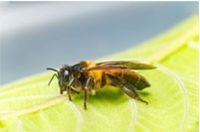
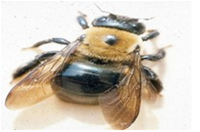
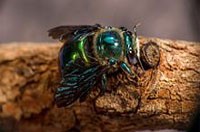

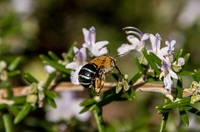
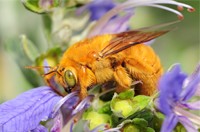
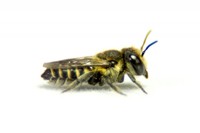
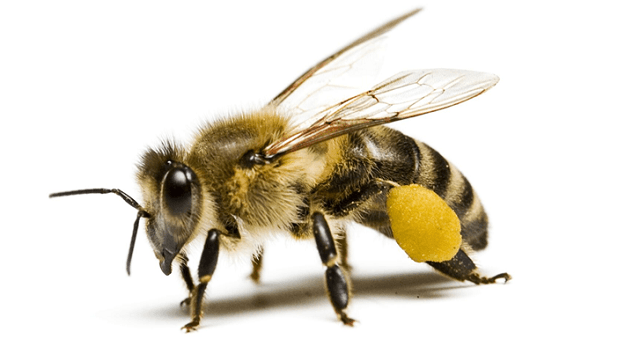
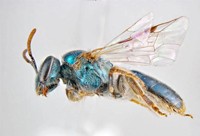
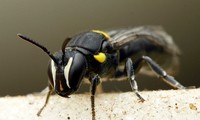
Over 1,500 species of native bees are found in Australia — and correct species identification is important in determining the most appropriate and humane removal method. Enviro Safe Pest Control removes all bee species found in Melbourne properties.
Honey Bee (Apis mellifera)
The most commonly encountered bee in Melbourne gardens and properties. Honey bees are seen near garden areas, treetops, and around the yard — they are great collectors of honey and will rush to the nest once their foraging is done. A healthy honey bee colony is docile unless provoked but can swarm aggressively when the hive is threatened. Honey bees are prioritised for live relocation whenever possible given their vital role in pollination and honey production.
Carpenter Bee (Xylocopa species)
Carpenter bees create holes in timber structures around homes — including wooden lawns, fences, outdoor furniture, and any exposed timber surface. The Yellow and Black Carpenter Bee is the largest native bee in Australia, growing up to 15 to 24 millimetres in size. Males have yellowy-brown fur uniformly covering their body while females have a glossy black abdomen with bright yellow fur on the thorax. They build their nests by cutting into soft or dead timber and prefer warm climates — making them common in Melbourne’s summer months.
Blue Banded Bee (Amegilla cingulata)
A striking native Australian bee identified by its glittering blue and white stripes across a black abdomen. Blue banded bees grow 8 to 13 millimetres long and are found darting near abelias and lavenders throughout Melbourne gardens. They are ground bees — building their nests in shallow burrows in the ground or in mud-brick structures. Multiple blue banded bees often nest in close proximity. These bees are found across most Australian regions except Tasmania.
Teddy Bear Bee (Amegilla bombiformis)
Fat, furry, brown bees that grow 7 to 15 millimetres long. Teddy bear bees are solitary — females build their nests individually in soft soil, though several may build in close proximity to each other. Their nests are also found underneath homes. They are found across most regions of Australia except Tasmania and are important native pollinators.
Resin Bee (Megachile species)
Resin bees are found in varied colours and sizes across Australia — from 14 millimetre bees with white tufts of hair to 8 millimetre black bees with bright orange abdomens. They build their nests in existing holes or gaps in timber or stonework, collecting resins and gums to build partitions between brood cells and seal nest holes — the behaviour that gives this species its name.
Stingless Bee (Tetragonula species)
Very small native bees growing 3 to 5 millimetres, black in colour, that do not sting. Stingless bees prefer tropical climates and are more commonly encountered in Queensland and the Northern Territory than in Melbourne — but can occasionally be found in warmer Melbourne summers.
Our Bee Removal Process in Melbourne
At Enviro Safe Pest Control, we thoroughly inspect your property to understand the extent of the bee infestation before recommending a removal approach. The method we deploy varies depending on the size and location of the nest, the species of bee, and the accessibility of the hive.
Step 1 — Property Inspection and Assessment
Your technician assesses the garden area, roof, walls, and surrounding environment to confirm the bee species, locate the hive or swarm, and assess the safest and most appropriate removal method. We check bee behaviour to locate the queen’s position, identify nearby flowering plants, assess accessibility for safe removal, and establish safety perimeters to keep residents and pets at a safe distance.
Step 2 — Live Relocation (Preferred Method)
Where the bees are swarming or temporarily resting — not yet established inside a structural void — live relocation is our preferred approach. We use a ventilated bee relocation box with frames to help the bees settle comfortably. Wearing full protective suits, our team approaches calmly. Using minimal smoke and soft brushing, we guide the bees into the relocation box without harming them or damaging surrounding structures and garden plants. We also use a bait trap method, coaxing the colony into a box hive and relocating the colony of honey bees to a managed hive where they can continue pollinating in a controlled environment. This free bee removal approach where suitable is Enviro Safe Pest Control’s contribution towards maintaining a balanced environment.
Step 3 — Established Hive Removal
Where a colony has established itself inside a wall cavity, roof void, or structural space, a more involved extraction is required. We use protective gear and equipment throughout to prevent potential injuries. We access the hive, remove the comb and colony, and thoroughly clean the area to prevent honey residue attracting future swarms. All entry and exit points that the bees used to access the structure are sealed as part of the process.
Step 4 — Entry Point Proofing
As part of our bee control services, we close up all entry and exit points that bees used to enter your structure. This is a critical step — if entry points are left unsealed, new swarms will be attracted to the residual honey and wax scent and re-establish a colony in the same location.
Step 5 — Prevention Advice
After removal, your technician provides practical advice on making your property less attractive to future bee activity — including planting natural repellents, managing garden flowering plants near the home, and avoiding floral-scented products that attract bees to specific areas of the property.
Making Your Property Less Attractive to Bees
There are several steps Melbourne homeowners can take to reduce the likelihood of bees establishing a hive on their property:
- Avoid using floral-scented perfumes outdoors in the garden — bees are strongly attracted to floral fragrances
- Plant natural repellents in your garden — peppermint, cinnamon, eucalyptus, citronella, and mint are all plants that bees dislike and will deter them from entering your property
- Seal gaps and cracks in walls, eaves, roof voids, and structural timbers that could provide an entry point for a swarm looking for a nesting site
- Cover all outdoor water sources — bees are strongly attracted to standing water, particularly in dry summer conditions
- Clear hollow tree trunks, old timber, and other natural cavity spaces from your garden that bees could use as nesting sites
- If you notice a swarm arriving in your garden, do not disturb them — contact Enviro Safe Pest Control on 1300 997 272 immediately for safe removal
What NOT to Do If You Find a Beehive
Many Melbourne homeowners are tempted to attempt DIY bee removal — but this is always dangerous and often makes the situation significantly worse. Bees can easily sense an attack through smell — if they fear your approach, they instantly send chemical signals to the colony and a defensive mass attack follows.
- Do not go near the hive or attempt to hit or disturb it — the risk of triggering a swarm attack is immediate
- Do not pour pesticides or water directly onto a beehive — this will agitate the colony and provoke aggressive stinging
- Do not attempt to use fire near a beehive without full professional protective gear and expertise
- Do not attempt to seal entry points while the colony is still inside the structure — this traps the bees and can result in them finding alternative exits deeper inside your home
- Do not ignore the situation and wait for it to resolve itself — established colonies will not leave voluntarily and will continue to expand
Bee Removal Across All Melbourne Suburbs
Enviro Safe Pest Control provides professional bee removal services across all Melbourne metropolitan suburbs. Our rapid-response team services areas including Richmond, Noble Park, Fitzroy, Carlton, Brighton, St Kilda, Dandenong, Frankston, Cranbourne, Berwick, Pakenham, Epping, South Morang, Thomastown, Bundoora, Melton West, Clyde, Box Hill, Croydon, Lalor, Hoppers Crossing, Mitcham, Sunshine, Footscray, Epping North, Wollert, and Mernda. If you don’t see your suburb listed, feel free to call us on 1300 997 272 — we proudly service all Melbourne metropolitan areas.
Bees Control Guides
Helpful resources for Melbourne homeowners and businesses dealing with bees.
Aggressive bees can be dangerous sometimes! A bee sting causes pain, redness
Over 1500 species of native bees are found in Australia. The bees are found in
Enviro Safe Pest Control does have expertise in Bees Removal. The pest controllers
Enviro Safe Pest Control offers bees control services for residential, commercial
The chemicals we use for bee removal are certified to be safe for humans and environment
Frequently Asked Questions
Quick answers to common questions about bees inspections, prevention, and treatment options.
Should I remove bees myself?
No. You should not risk attempting to remove bees on your own. Honey bees are generally gentle but once they sense a threat they sting badly to defend themselves and the hive. Hiring professional bee exterminators is always the safest approach. Our team uses safe, protective methods to remove the hive from your property without putting anyone at risk.
Will bees attack me if I leave them alone?
Bees never attack unless they sense a threat. However, it is not advisable to leave an established hive unattended — colonies grow rapidly and a hive inside a wall cavity or roof void will expand until removal becomes significantly more complex and costly. Contact Enviro Safe Pest Control as soon as you discover a hive on your property.
Do you kill the bees or relocate them?
Wherever possible, Enviro Safe Pest Control prioritises live relocation over destruction. We use a bait trap method to coax honey bee colonies into a relocation box and relocate them to a managed hive where they can continue pollinating. Our free bee removal service where suitable is our contribution to maintaining a balanced environment. In situations where live relocation is not possible, we use eco-friendly methods to eliminate the colony safely.
How do bees get into my roof or walls?
Many bee species prefer void spaces, cracks, and structural outlets as nesting sites. Gaps in roof tiles, brickwork weep holes, gaps around pipes, and unsealed eaves are all common entry points for swarms looking for a new home. As part of our bee removal service, we seal all identified entry and exit points after the colony is removed.
How do I know if bees are nesting inside my walls?
Key signs include a persistent buzzing sound from inside walls or ceilings, dark staining or honey residue seeping through wall surfaces, an unusual sweet smell near walls or ceiling areas in warm weather, and bees entering and exiting gaps in brickwork or roof tiles. If you notice any of these signs, call 1300 997 272 for a professional inspection.
Is bee removal safe for my children and pets?
Yes. Our technicians use full protective gear and establish safety perimeters to keep all residents and pets at a safe distance during the removal process. All eco-friendly products we use are safe for the surrounding environment. We advise on when it is safe for your family to return to the affected area after treatment.
Can bees come back after removal?
If entry points are left unsealed, new swarms will be attracted to the residual honey and wax scent left by the previous colony and will attempt to establish in the same location. This is why sealing all entry and exit points is a critical part of our bee removal process — not an optional extra.
Do you offer emergency bee removal in Melbourne?
Yes. For emergency bee and wasp situations, Enviro Safe Pest Control does its utmost to attend your Melbourne property on the same day. Call 1300 997 272 as soon as you discover a hive or swarm on your property.
What plants can I use to keep bees away from my property?
Planting natural repellents in your garden is an effective deterrent. Bees dislike the smell of peppermint, cinnamon, eucalyptus, citronella, and mint. Planting these around your garden boundary and near common entry points will deter bees from establishing in your property.
How much does bee removal cost in Melbourne?
The cost of bee removal in Melbourne depends on the species, the size of the colony, the location of the hive, and the accessibility of the nest. Enviro Safe Pest Control provides a free quote after inspection. Call 1300 997 272 to arrange your free assessment today.
Don’t Let Bees To Rule Your Premises. Contact Us Today
We offer pest control services in eastern, western, northern and all suburbs of Melbourne. If you are looking for pest controller near you? Give our experts a ring and get the best effective solution.