
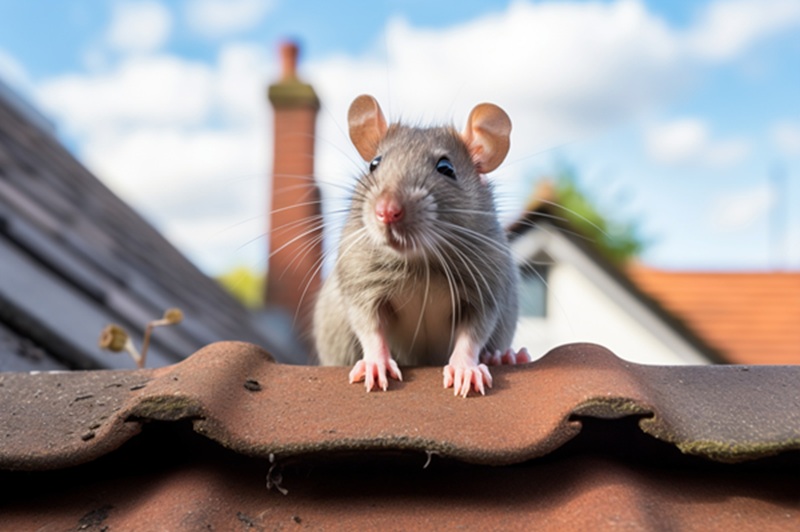
That scratching sound coming from your ceiling at night is not your imagination. For thousands of Melbourne homeowners every year, it is the first sign that rats have moved into the roof void and by the time you hear them, the infestation has almost certainly already grown larger than you think. If you are hearing unexplained noises above you, smelling something unusual in your ceiling, or noticing damage around your home, you need rat control in Melbourne sooner rather than later. The longer a rat colony is left untreated, the more damage it causes and the harder and more expensive it becomes to eliminate.
This guide will walk you through the seven most reliable warning signs that rats are living in your roof, why Melbourne homes are particularly vulnerable, and exactly what to do when you suspect an infestation.
Why Melbourne Roofs Are a Prime Target for Rats
Melbourne’s climate, housing stock, and suburban greenery create the perfect environment for roof rats to thrive. These agile climbers use overhanging tree branches, power lines, and garden trellises to access gutters and roof cavities with ease.
The problem is particularly common in Melbourne’s established northern and south-eastern suburbs, where mature trees, older homes with timber fascia boards, and subfloor access points give rats multiple entry routes. Suburbs like Lalor, Thomastown, Dandenong, Epping, and Berwick regularly see high rat activity during the cooler months as rodents seek warmth, shelter, and a reliable food source indoors.
New estate areas such as Wollert, Mernda, and Clyde North are not immune either. Construction activity disturbs established rodent populations and pushes them toward nearby homes.
The 7 Warning Signs of Rats in Your Roof
- Scratching or Scurrying Sounds at Night
This is the most common and unmistakable sign. Roof rats are nocturnal, meaning they are most active between dusk and dawn. If you hear scratching, scurrying, or thumping sounds coming from your ceiling particularly in the evening or early morning, rats are almost certainly using your roof void as a highway or nesting zone.
The sounds are typically described as rapid, light scratching moving across the ceiling, heavier thumping when rats jump between joists, and gnawing sounds near the edges of the roof cavity.
Do not dismiss this as possums. While possums are also common in Melbourne roofs, their sounds are much heavier and slower. Rat activity sounds faster, lighter, and more continuous.
- Dark Droppings Along Roof Edges or in the Ceiling
Rat droppings are one of the most definitive signs of an active infestation. They are dark brown to black, roughly 10 to 20 millimetres long, and tapered at both ends, similar in appearance to a large grain of rice.
If you have roof access, check along the edges of the ceiling insulation, around water pipes, and near any stored items in the roof space. Fresh droppings are soft and dark while older droppings become grey and crumble easily.
Finding droppings in your roof void is confirmation that rats are present, not just passing through.
- Gnaw Marks on Timber, Wiring, or Insulation
Rats must constantly gnaw to keep their continuously growing teeth trimmed. In a roof void, this gnawing causes serious damage to timber rafters and joists, electrical wiring which is a significant fire risk, insulation batts which reduces energy efficiency, and plastic pipes and ducting which can cause leaks.
If you notice flickering lights, unexplained electrical faults, or find insulation debris around ceiling access points, rats could be the cause. Electrical damage from rat gnawing is one of the leading causes of house fires in Australian suburban homes, which is why fast action is critical.
- A Strong Musty or Ammonia-Like Smell
An established rat colony produces a distinctive, strong smell caused by urine, droppings, and the pheromones rats use to communicate. This smell is often described as musty or similar to ammonia, and is most noticeable near roof access hatches, in wardrobes against exterior walls, or in rooms directly below the roof cavity.
If you are noticing an unexplained smell in your home that gets worse at night or in humid conditions, a rat colony in your roof void is a strong possibility.
- Grease Marks or Smear Trails on Walls and Beams
Rats travel the same routes repeatedly, and their oily fur leaves dark grease marks along surfaces they regularly brush against. In roof voids, these smear trails are visible along timber beams, around entry holes, and near droppings clusters.
On the outside of your home, look for grease marks around gaps in the eaves, weep holes in brickwork, and where pipes enter the wall cavity. These trails act as navigation guides for the colony and finding them confirms that rats are using a specific route as a regular travel corridor.
- Nesting Material in the Roof or Ceiling
Rats build nests from soft, shredded material they collect from inside and outside your home. In roof voids, common nesting materials include shredded insulation, torn paper or cardboard, fabric pulled from stored items, and plant material carried in from outside.
If you find a ball-shaped nest constructed from shredded materials in a dark corner of your roof cavity, an active colony is almost certainly present and likely includes young rats that are not yet visible.
- Seeing a Rat During the Day
Like cockroaches, rats are nocturnal by nature. Spotting a rat during daylight hours either in your roof, garden, or inside your home is a serious warning sign that the colony has grown large enough that competition for resources is pushing individuals out into the open.
Daytime rat sightings should be treated as an urgent signal to act immediately. The hidden population is almost certainly far larger than the single rat you have seen.
What NOT to Do When You Suspect Rats in Your Roof
Many Melbourne homeowners make the mistake of reaching for supermarket rat baits or snap traps as a first response. While these may catch individual rats, they will not eliminate the colony and poorly placed bait can result in rats dying inside your wall cavities, causing a persistent and extremely unpleasant odour for weeks.
Avoid placing loose bait in open areas where pets and children can access it. Do not move stored items in the roof without protective gloves and a mask. Never seal entry points before the infestation has been treated as this can trap rats inside and cause greater damage to your property.
How Professional Rat Control Works
A licensed rat control technician will conduct a thorough inspection of your roof void, subfloor, and external perimeter to confirm the species, identify all entry points, and assess the size of the infestation. Treatment typically involves tamper-resistant bait stations placed in the roof void and along rat travel corridors, structural proofing to seal entry points after treatment is complete, and a follow-up inspection to confirm the colony has been fully eliminated.
The difference between professional treatment and DIY approaches is the elimination of the entire colony, not just the rats you can hear. Professional treatment also includes proofing advice to prevent re-infestation, which is critical in Melbourne suburbs where rat pressure from surrounding greenery and neighbouring properties remains constant.
Act Now Before the Damage Gets Worse
Rats in your Melbourne roof are not a problem that resolves itself. Every week without treatment means more gnawing damage, more droppings contamination, and a colony that grows increasingly difficult to eliminate. The risk to your electrical wiring alone makes fast action essential.
If you have noticed any of the seven warning signs above, the time to act is right now. Do not wait until you can see the damage with your own eyes. By the time structural or electrical damage becomes visible, the repair costs will far exceed the cost of professional treatment.
For trusted, eco-friendly pest control in Melbourne that eliminates the problem at the source, contact Enviro Safe Pest Control today. Our licensed technicians service all Melbourne suburbs including Epping, Lalor, Dandenong, Frankston, Berwick, and the entire northern and south-eastern corridor. Book your free inspection online or call 1300 997 272 right now. The sooner you call, the sooner your home is rat-free.