
Enviro Safe Pest Control in Melbourne
Ant Control Melbourne — Professional Ant Removal
If ants have started marching through your Melbourne kitchen, bathroom, or garden, the trail you can see represents only a fraction of the problem. Ants are social insects that live in highly organised colonies — what you see foraging across your benchtop is just 5 to 10 percent of the total population. The rest of the colony — including the queen — remains hidden deep inside the nest, completely untouched by surface sprays and DIY products.
At Enviro Safe Pest Control, we have been providing professional ant control services in Melbourne since 2013. With a thorough understanding of the lifecycle and behaviour patterns of Melbourne’s most common ant species, our licensed technicians identify the type of ants that have invaded your property, locate their entry points, and apply targeted treatments that reach the source of the colony — not just the ants you can see. When ants start to take over your home, do not let your children and pets suffer. Call the experts at Enviro Safe Pest Control for ant control treatments immediately.
- Professional ant control across all Melbourne suburbs
- Eco-friendly, APVMA-registered products — safe for children and pets
- Transfer technology treatments that eliminate entire colonies
- Victorian-licensed and insured technicians
- Perfect combination of baits and traps tailored to each species
- Serving Melbourne since 2013 — 10+ years of local experience
Why Ants Are a Year-Round Problem in Melbourne
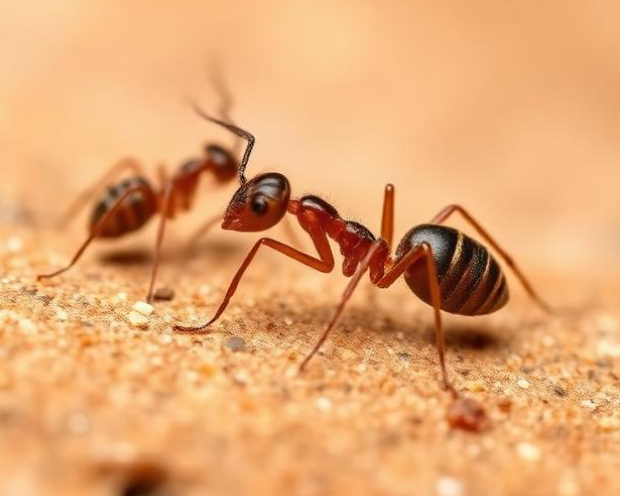
Melbourne’s unique climate — with its intense summer heatwaves, high humidity, and cool wet winters — creates ideal conditions for ant activity in both residential and commercial properties throughout the year. In Victoria, summer is peak ant season. The primary driver for summer ant invasions is actually thirst, not hunger. As the soil in Melbourne gardens dries out during heatwaves and moisture levels in outdoor nests plummet, scout ants are sent on desperate missions to find water inside your home. A single sticky residue of honey on a jar or a crumb on the kitchen bench is enough to redirect hundreds of workers from the dry garden into your living space.
Melbourne’s northern suburbs — from Epping to Wollert — see particularly high ant activity as new housing developments disturb established nesting sites, triggering massive scout invasions in newly built homes. The sudden weather shifts common in Victoria, such as a 40-degree northerly followed by a sharp southerly change, also drive ants indoors as colonies seek stable temperatures and moisture.
Ants can carry bacteria and transfer them to food as well as open wounds. You can find them near food sources, in your garden, or at the base of exterior walls. Applying DIY products may help control visible ants temporarily, but you cannot get rid of the colony completely without professional treatment. Enviro Safe Pest Control has been providing professional ant control services in Melbourne that involve monitoring and managing the infestation efficiently.
Why DIY Ant Sprays Make the Problem Worse
A critical mistake many Melbourne homeowners make is reaching for a supermarket spray when they first spot an ant trail. Most retail products are formulated with fast-acting contact killers that only affect the 5 to 10 percent of the colony currently out foraging. Worse, for many species common in Melbourne, DIY spraying triggers a biological survival mechanism called colony budding — where the colony perceives a threat and splits into multiple satellite nests, effectively multiplying your problem overnight.
Ants have a tendency to leave pheromone trails so other ants can follow them. Wiping the trail with soapy water removes this signal temporarily but does not address the nest. If you attempt to place a retail bait station on a surface covered in food residue, the ants will choose the real food every time — making the bait ineffective.
Professional pest control in Melbourne has shifted toward Transfer Technology — the core of why professional treatment works where DIY fails. At Enviro Safe Pest Control, we use non-repellent liquids and specialised gels that are undetectable to ants. Foragers walk through the treatment or consume the gel without knowing they have been exposed. They then return to the nest, carrying the active ingredient on their bodies. Because the product is slow-acting, the ants have time to interact with the queen and the rest of the colony, spreading the treatment throughout the entire nesting structure — resulting in total colony elimination including the queen.
Free quote in minutes
Common Ant Species Found In Australia
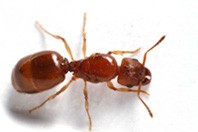
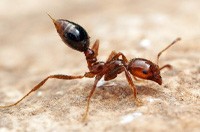
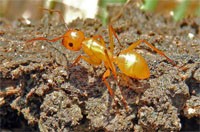
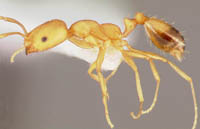
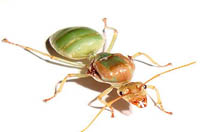
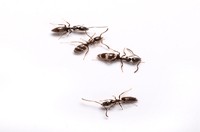
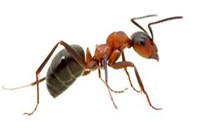
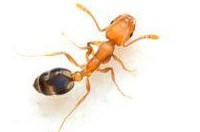
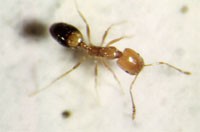
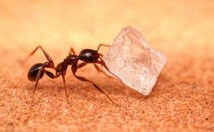
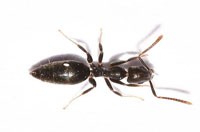
Common Ant Species Found in Melbourne
Correct species identification is essential before any treatment is applied. Different ant species require completely different control strategies — treating the wrong species with the wrong method can trigger colony budding and dramatically worsen the infestation.
Black House Ant
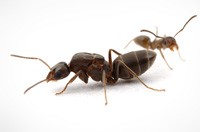
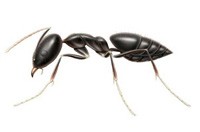
The most common culprit behind ant control calls in Melbourne. Measuring 2.5 to 3 millimetres, these shiny black scavengers are primarily drawn to kitchens and bathrooms. While they do not sting, they are significant hygiene risks — foraging in rubbish bins and outdoor waste before trailing across kitchen benches and into food storage areas. Their pheromone trails create ant highways that lead the entire colony directly to food sources.
Bull Ant
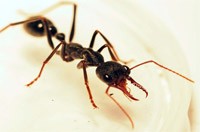
Among the most aggressive and primitive ant species in the world. Bull ants grow up to 40 millimetres in size and have large eyes, excellent vision, and potent venom-loaded stings. They actively track and follow intruders, delivering multiple stings by curling their abdomen and biting simultaneously with their jaws. There are 90 species of bull ants identified throughout Australia. Their stings can trigger life-threatening anaphylactic reactions. Bull ants do not build their own colony — they invade the nests of other ant species and take them over, targeting underground nests with hidden small entrances.
Ghost Ant
Small in size with a translucent abdomen and legs, and a dark brown head and thorax. Ghost ants are among the most widely spread ant species in the world, preferring warm and high-moisture environments. They invade sinks, toilets, baths, and showers, and are found in potted plant soil, wall voids, and behind skirting boards in Melbourne interiors. Ghost ant colonies have multiple queens, with worker ants in each province ranging from 100 to 1,000. They do not sting but destroy plants and contaminate household food.
Pharaoh Ant
Tiny ants — 1.5 to 3 millimetres — ranging from light yellow-brown to dark brown. Pharaoh ants nest in warm areas and are commonly found in hospitals and nursing homes adjacent to heating ducts. They migrate vast distances in search of food, preferring high-protein foods including meat, blood, and fatty foods. Pharaoh ants are highly prone to colony budding — one wrong spray can cause them to scatter and infest an entire building. They are a major health risk as they can transmit pathogens including Salmonella and Staphylococcus, making professional treatment essential for any property where they are identified.
Singapore Ant
Distinguished by a light-brown colour with a darker posterior abdomen, growing 1.5 to 3 millimetres long. Singapore ants are particularly dangerous because they nest in power sockets and chew through the plastic coverings of electrical cables — causing electrical fires and destroying electrical equipment. Their bites are painful. These ants form slow-moving trails and feed on sweet foods as well as animal materials.
Pavement Ant
Famous for infesting commercial buildings. Worker pavement ants range from 2.5 to 3 millimetres long, building their nests around driveways, decaying wood, below sidewalks, and in the soil near building foundations. Though active at night, they invade interiors during the day. They create significant nuisance during swarming season — their mating period — when large numbers of winged ants emerge simultaneously.
Sugar Ant
A common Australian ant species with a brown-orange body and sizeable black head, ranging from 7 to 12 millimetres — larger than most other ant species. Despite their name, sugar ants are omnivores and also feed on meat. They target hollow woods, tree branches, shrubs, and soil beneath rocks outdoors. Importantly, sugar ants do not sting and do not bite humans.
Coastal Brown Ant
Shiny dark-brown ants with worker ants ranging from 1.5 to 3 millimetres and soldiers from 3.5 to 4.5 millimetres. Coastal brown ants are distinguished by their large heads and powerful jaws. They dwell in exterior paths and rockeries, and can be found in building walls and wall crevices. Their nests are characterised by interconnected holes. They feed on dead animal meat and insects.
Odorous House Ant
Dark brown to black ants ranging from 1.59 to 3.18 millimetres. Odorous house ants dwell in exposed soil and wall cracks. They do not cause structural damage but contaminate food. When crushed, they emit a distinctive foul smell — which gives them their name. While not a health or structural risk, food contamination from these ants makes professional treatment worthwhile in kitchen environments.
Our Ant Control Treatment Process in Melbourne
Enviro Safe Pest Control applies a structured, colony-targeting approach that eliminates the entire ant population — not just the visible foragers.
Step 1 — Inspection and Species Identification Our pest control experts identify the type of ants that have invaded your property and discover their entry points. Ants typically gain access through small cracks and holes in walls, doorways, and window sills. We also identify conducive conditions — leaking pipes, overhanging tree branches acting as ant bridges, and structural gaps that act as entry points.
Step 2 — Perimeter Treatment The perimeter of your home or business is treated to target the nests of ants at the exterior boundary. This prevents foragers from re-entering the property after colony treatment is applied.
Step 3 — Interior Treatment Using Transfer Technology Our unique, eco-friendly formulations are applied to the interior of your property — including basements, attics, bathrooms, and all areas with evidence of ant presence. We use a perfect combination of baits and traps that use transfer technology to reach the queen and collapse the entire colony from the inside out.
Step 4 — Monitoring and Prevention Advice After treatment, we monitor the infestation and provide practical advice on exclusion — sealing the gaps, fixing moisture issues, trimming overhanging branches, and managing food storage to prevent future infestations.
Proactive Tips to Prevent Ants Entering Your Melbourne Home
- Find the source — ants prefer warm environments with easy access to food and water, so locating and blocking their entry point is the critical first step
- Immediately wipe ant trails with soapy water after they are killed — this removes the pheromone trail so other ants cannot follow it
- Store all food including pet food in sealed airtight containers — even a small honey residue on a jar is enough to attract a scout
- Fix all leaking pipes and reduce moisture in kitchens and bathrooms — many Melbourne ant invasions are driven by thirst rather than hunger
- Trim trees and plants so branches are not touching the exterior walls or roof — overhanging branches act as ant bridges directly into your home
- Seal cracks and gaps in walls, doorways, and window sills — ants access homes through incredibly small entry points
- Plant natural repellents such as peppermint, cinnamon, and eucalyptus near garden entry points
Ant Control Across All Melbourne Suburbs
We proudly service a wide range of Melbourne suburbs including Richmond, Noble Park, Fitzroy, Carlton, Brighton, St Kilda, Dandenong, Frankston, Cranbourne, Berwick, Pakenham, Epping, South Morang, Thomastown, Bundoora, Ringwood, Clyde, Box Hill, Croydon, Lalor, Hoppers Crossing, Mitcham, Sunshine, Footscray, Epping North, Wollert, and Mernda. Don’t see your suburb? Call 1300 997 272 — we service all Melbourne metropolitan areas.
Ant Control Guides
Helpful resources for Melbourne homeowners and businesses dealing with Ants.
Ants can carry any bacteria and would transfer them to food as well as open wounds.
Ants can carry any bacteria and would transfer them to food as well as open wounds.
Most of the ant species dwell in the exteriors and build nests in soil or trees
If you want to get rid of the ants, you must deploy the best Ants Treatment technique
The Ant Control and treatment techniques get tailored according to the requirements
Frequently Asked Questions
Quick answers to common questions about ant inspections, prevention, and treatment options.
Why do I keep getting ants in my Melbourne home even after using supermarket sprays?
DIY sprays are contact killers that only affect the 5 to 10 percent of the colony currently foraging — the queen and the rest of the colony deep inside the nest are completely untouched. For many Melbourne species, spraying actually triggers colony budding, where the colony perceives a threat and splits into multiple satellite nests — multiplying your problem. Professional treatment using transfer technology reaches the queen and collapses the entire colony.
Why are there suddenly so many ants in summer?
In Victoria, summer is peak ant season. The primary driver is actually thirst rather than hunger — as Melbourne gardens dry out during heatwaves, scout ants are sent inside desperately looking for water. High summer humidity also triggers nuptial flights where winged ants start new colonies. The queen also lays eggs at an accelerated rate in warm conditions, causing a population explosion that forces workers to forage more aggressively inside homes.
Are ants dangerous?
Ants can carry bacteria and transfer them to food and open wounds, creating a hygiene risk in kitchens. Certain species pose more serious risks — Bull ants deliver multiple painful venomous stings and can trigger life-threatening anaphylactic reactions. Singapore ants nest in power sockets and can chew through electrical wiring, causing house fires. Pharaoh ants transmit Salmonella and Staphylococcus and are a major health risk in healthcare facilities.
What is transfer technology and why does it work better than sprays?
Transfer technology uses non-repellent treatments that are completely undetectable to ants. Foragers walk through the product or consume the gel without knowing they have been exposed. They then return to the nest carrying the active ingredient on their bodies and interact with the queen and the rest of the colony — spreading the treatment throughout the entire nesting structure and resulting in total colony collapse.
Are your ant treatments safe for children and pets?
Yes. All products used by Enviro Safe Pest Control are APVMA-registered and selected specifically for their safety profile in domestic environments. Our treatments are eco-friendly and safe for children and pets once dry. Your technician will advise on any specific precautions before treatment begins.
How do I know which type of ant I have?
Different ant species look different and behave differently. Black house ants are small and shiny black. Bull ants are large — up to 40 millimetres — and highly aggressive. Ghost ants have translucent abdomens. Pavement ants build mound-like nests in driveways. Sugar ants are brown-orange and larger than most species. If you are unsure, our licensed technicians can identify the species during a professional inspection and recommend the correct treatment approach.
How quickly does professional ant treatment work?
Most surface-active species show a significant reduction within 24 to 48 hours of treatment as perimeter barriers take effect. Colony elimination through transfer technology typically takes 2 to 4 weeks as the treatment spreads through the entire colony structure to reach the queen. Your technician will advise on expected timelines based on the species and severity of the infestation.
Do I need to leave my home during ant treatment?
In most cases no. Our ant treatments are designed to cause minimal disruption. We recommend keeping children and pets away from treated surfaces for 30 to 60 minutes while products dry. Your technician will provide specific guidance based on the treatment applied.
How do ants get into my Melbourne home?
Ants typically gain access through small cracks and holes in walls, doorways, and window sills. Overhanging tree branches that touch the roof or exterior walls act as ant bridges. Gaps under doors, around pipes, and through weep holes in brickwork are also common entry points. As part of our ant control service, we identify all entry points and advise on sealing them to prevent re-infestation.
How much does ant control cost in Melbourne?
The cost depends on the ant species, the size of the property, the extent of the infestation, and the number of entry points requiring treatment. Enviro Safe Pest Control provides a free quote after inspection. Call 1300 997 272 to arrange your free assessment today.
Don’t Let Ants To Rule Your Premises. Contact Us Today
We offer pest control services in eastern, western, northern and all suburbs of Melbourne. If you are looking for pest controller near you? Give our experts a ring and get the best effective solution.